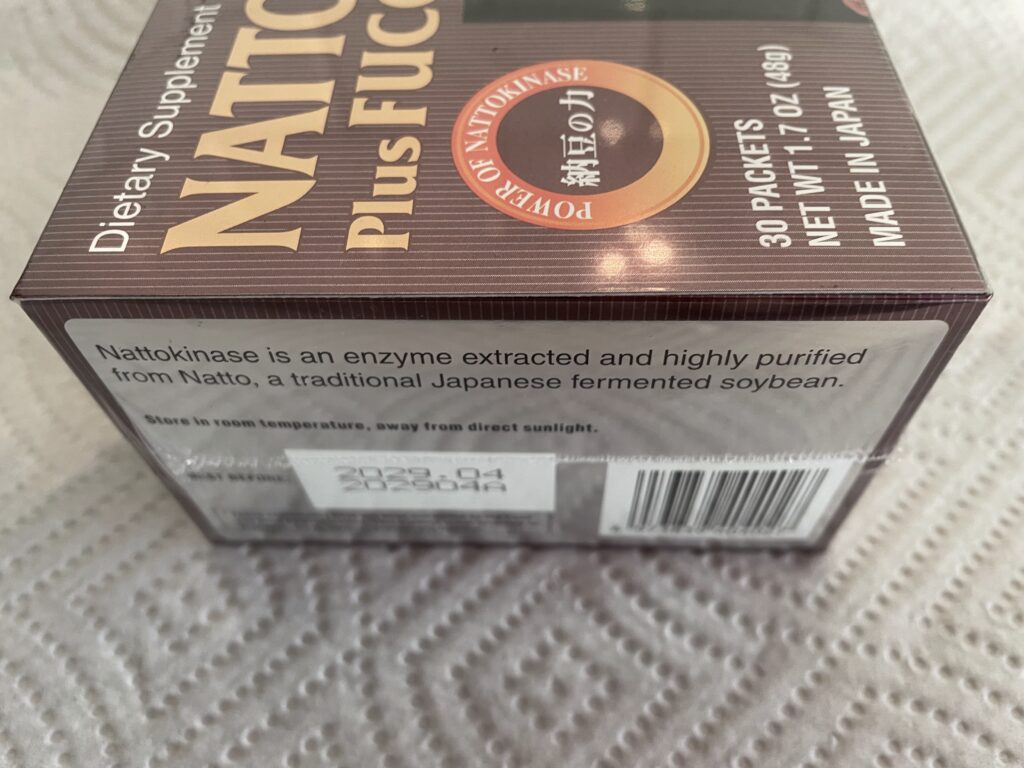
Nattokinase works by directly breaking down fibrin, the protein that forms blood clots, and by activating the body’s own clot-dissolving system, boosting tissue plasminogen activator (t-PA) and inhibiting its inhibitor (PAI-1) to enhance fibrinolysis. It also helps lower blood pressure by inhibiting the Angiotensin-Converting Enzyme (ACE), reduces inflammation, and improves overall circulation, supporting cardiovascular health. It also helps lower blood pressure by inhibiting the Angiotensin-Converting Enzyme (ACE), reduces inflammation, and improves overall circulation, supporting cardiovascular health.
Nattokinase is a serine protease enzyme best known for its ability to break down blood clots and support cardiovascular health. Its main mechanism of action is direct fibrinolysis—dissolving fibrin, the protein that forms blood clots—along with additional effects on inflammation, oxidative stress, and blood pressure regulation.
Key Mechanisms:
Fibrinolytic Activity Directly breaks down fibrin, dissolving blood clots and reducing thrombosis risk 478314
Inhibition of Coagulation Inhibits coagulation factors by upregulating proteinase C inhibitors and protein S 210
Blood Pressure Regulation Inhibits angiotensinogen conversion to AngII and promotes kininogen degradation, lowering BP 2
Anti-inflammatory & Antioxidant Reduces pro-inflammatory cytokines and oxidative stress, protecting tissues 110
Neuroprotection Protects neurons by modulating autophagy, apoptosis, and reducing cell death in stroke models 1
Additional Insights
The enzyme’s activity depends on its serine endopeptidase function; heat-inactivated nattokinase loses its effects, confirming the importance of its enzymatic action 18.
Nattokinase can increase paraoxonase 1, which helps prevent atherosclerosis 2.
It may also reduce the virulence of certain bacteria by degrading signaling peptides, suggesting broader biological effects 9.
What’s Unclear
While the main mechanisms are well-established in animal and in vitro studies, more large-scale human clinical trials are needed to confirm all benefits and clarify optimal dosing 104.
In summary, nattokinase primarily works by breaking down fibrin to dissolve clots, but it also influences blood pressure, inflammation, and oxidative stress, making it a promising agent for cardiovascular and neuroprotective health.
How does nattokinase modulate oxidative stress and inflammation pathways in ischemic stroke?
Nattokinase’s Neuroprotective Mechanisms in Ischemic Stroke: Targeting Inflammation, Oxidative Stress, and Coagulation
KEY TAKEAWAY·Nattokinase (NK) shows multifaceted neuroprotection in ischemic brain injury, targeting inflammation, oxidative stress, and coagulation, with its therapeutic effect related to its serine endopeptidase activity.
TAKEAWAY· Nattokinase shows strong fibrinolytic activity and few side effects, making it a promising agent for thrombosis therapy.
Biotechnology, Bioengineering and Applications of Bacillus Nattokinase
KEY TAKEAWAY·Nattokinase is a potential low-cost thrombolytic drug with no side-effects, and its biotechnology and bioengineering progress has led to improved production yields, activity, and stability.
nattokinase production has potential for treating cardiovascular disease and as a functional food additive, with genetic engineering, protein engineering, fermentation optimization, and process control being effective strategies for enhancement.